

Editor’s Note
Prof. Megha Gangopadhyay teaches Human Resources and Organizational Behavior at Globsyn Business School – one of the top MBA in HR colleges in Kolkata. Prof. Gangopadhyay has over 21 years of experience in corporate HR leadership roles and academia. She brings a wealth of experience and knowledge across all aspects of the human resource management function including training and development. Prof. Gangopadhyay possesses a proven track record of delivering engaging and informative instruction, leveraging the latest pedagogy, and fostering a dynamic and inclusive learning environment. She also has experience in curriculum development. Passionate about mentoring the workforce of the future, Prof. Gangopadhyay is also a keen foreign language enthusiast with advanced proficiency in Spanish.
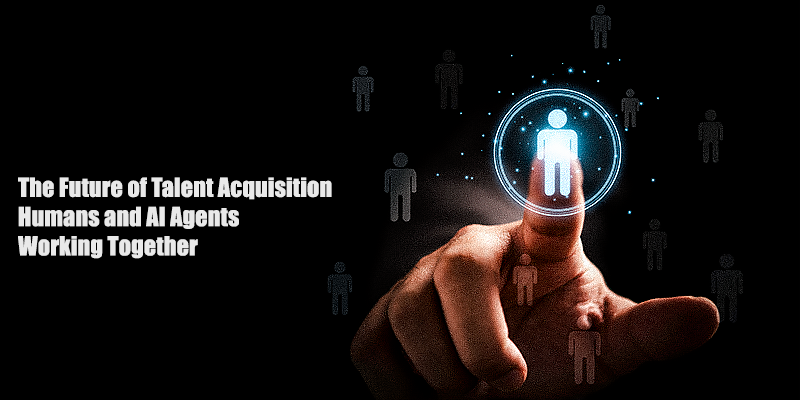
The contemporary workforce is undergoing a profound transformation. As NVIDIA CEO Jensen Huang recently remarked, “The future of work is agentic” – signifying an era where humans and AI agents collaborate seamlessly to enhance innovation and productivity. For HR professionals, particularly in talent acquisition, this means reimagining recruitment not just as hiring human employees, but as building hybrid teams of humans and purpose-built AI agents.
Historically, recruitment has centered on identifying, attracting, and retaining human talent. But in the era of AI, organizations will increasingly recruit AI agents alongside human employees. These agents – specialized AI systems designed for tasks such as data analysis, customer interaction, or workflow automation – will become integral members of the workforce.
This evolution introduces new nuances into the recruitment process. Dual evaluation would be the norm where HR teams will assess both human candidates and AI agents for their fit within organizational culture and goals. For capability matching, just as we match human skills to job roles, AI agents will be evaluated for their algorithmic strengths, adaptability, and ethical compliance. Recruitment will ultimately extend to ensuring smooth collaboration between humans and AI, requiring HR to design onboarding processes that foster trust and synergy. In this future, HR professionals will act as architects of hybrid teams, balancing human creativity with machine precision.
As AI takes over repetitive and analytical tasks, the human edge will lie in skills machines cannot replicate. The most sought-after competencies will include critical thinking, clear, empathetic and persuasive communication, domain expertise, where deep knowledge of industries will allow humans to guide AI applications effectively and influencing skills for inspiring teams, negotiating outcomes, and shaping organizational culture. In essence, while AI agents will excel at execution, humans will be valued for judgment, creativity, and leadership.
The future of talent acquisition is not about choosing between humans and machines – it is about designing teams where both coexist and complement each other. As Jensen Huang’s vision of an ‘agentic workforce’ takes shape, HR professionals must embrace their role as curators of this new ecosystem.
Globsyn Business School is treading this path by equipping its students with the technical knowledge to harness AI and the human skills to lead with empathy and influence. In doing so, it ensures that tomorrow’s managers are not just recruiters of talent, but visionaries shaping the future of work itself.

Prof. Megha Gangopadhyay
Faculty – HR & OB
Globsyn Business School